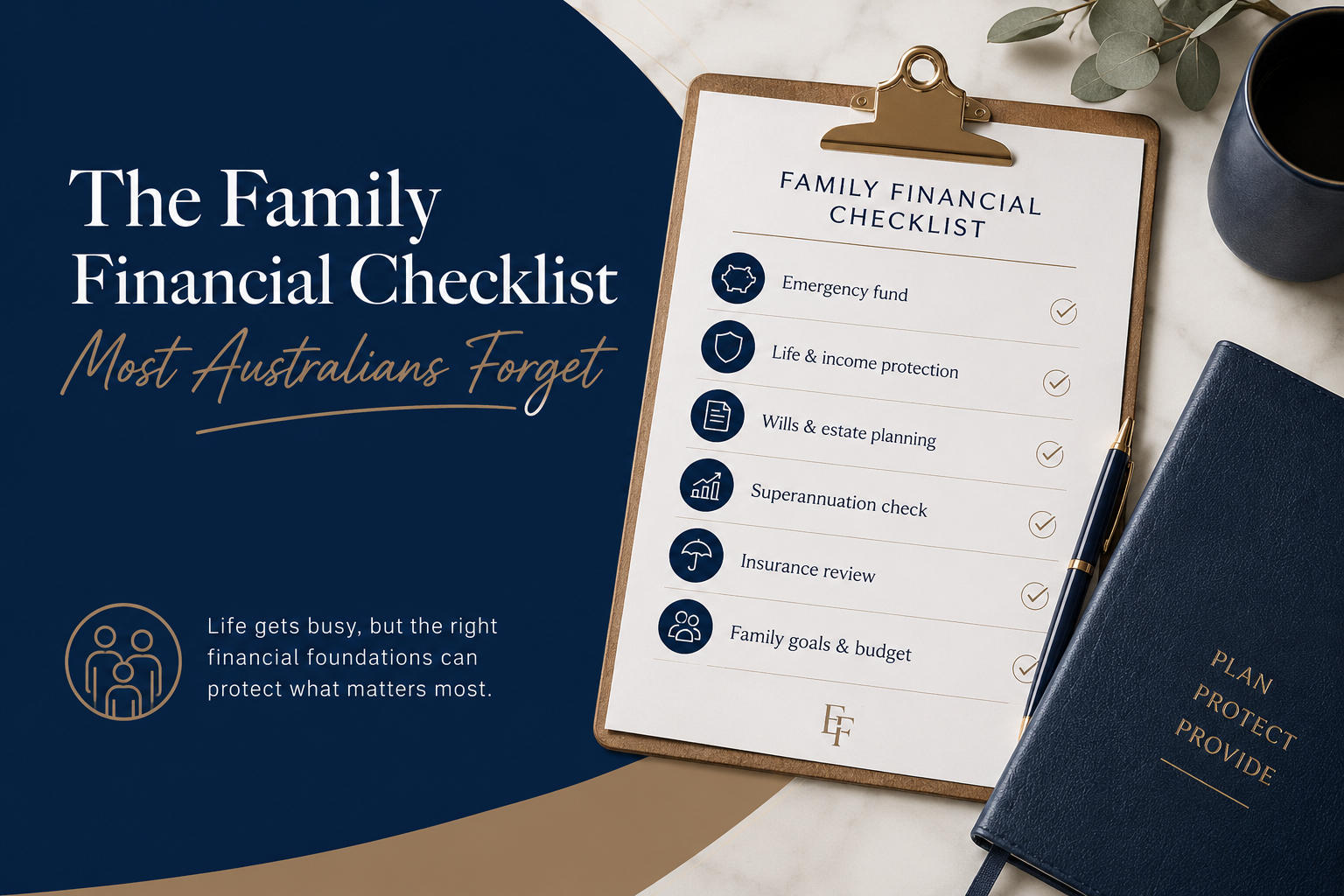
It’s not something most of us like to think about.
But if you couldn’t work tomorrow because of an accident, illness or injury, how long could your family continue paying the bills before things started to become difficult?
For many families, the answer is probably not as long as they think.
Your income often pays for almost everything — the mortgage, groceries, school costs, utilities, car repayments, insurance and all the other everyday expenses that keep your household running.
So protecting that income can be just as important as building your savings and investments.
What would happen if your income stopped?
Imagine your income suddenly disappeared.
Your mortgage or rent would still need to be paid.
The electricity bill would still arrive.
The kids would still need to get to school.
The car would still need registration, servicing and fuel.
And your family would still need to eat.
The problem isn't just the loss of income itself. It's the pressure that can build when your regular expenses continue while your ability to earn is reduced.
That’s why it’s worth asking:
“If I couldn't work tomorrow, how long could we realistically manage?”
Start with your emergency savings
Your first line of defence is often your cash reserves.
An emergency fund can help cover unexpected expenses or a temporary reduction in income.
But even a healthy emergency fund may only cover a few months of expenses.
If your family relies heavily on one income, it's worth understanding exactly how long your savings would last.
A simple calculation is:
Available savings ÷ essential monthly expenses = months of financial breathing room
For example, if you had $30,000 available and your essential household expenses were $6,000 a month, you would have around five months of breathing room.
That can provide valuable time — but what happens if you're unable to work for longer?
What about your insurance?
This is where income protection and other personal insurance can become important.
Depending on your circumstances, insurance can help provide financial support if you become unable to work or suffer a serious illness or injury.
Different types of cover are designed to do different things.
Income protection can provide an ongoing income if you're unable to work due to illness or injury, subject to the policy terms.
TPD insurance can provide a lump sum if you meet the policy's definition of total and permanent disability.
Trauma insurance
can provide a lump sum following certain specified medical conditions covered by the policy.
Life insurance can provide a lump sum to your beneficiaries if you die.
They're not interchangeable, and having insurance doesn't automatically mean you have the right amount of cover.
Don't just look at the mortgage
When people think about protecting their family financially, they often focus on the mortgage.
That's important — but it's only one part of the picture.
Consider your family's total financial commitments:
- Mortgage or rent
- Groceries and household expenses
- Utilities
- Car loans and other debts
- School and childcare costs
- Insurance premiums
- Medical and health expenses
- Lifestyle costs
- Future education or family commitments
Then consider what would happen to those expenses if your income reduced or disappeared.
Your partner's income matters too
If you're part of a couple, it's easy to assume that one income could simply cover everything if the other person couldn't work.
But would it?
Take a look at your household expenses compared with your partner's income on its own.
You might discover that your family could comfortably manage for a few months — but not indefinitely.
That's useful information to have before something happens.
What if you couldn't work for years?
This is where the conversation becomes more important.
A short-term illness might be manageable with savings and existing leave entitlements.
A longer-term inability to work is very different.
The longer your income is affected, the more pressure can build on:
- Your savings
- Your mortgage
- Your super
- Your investments
- Your partner's income
- Your family's lifestyle
Good financial planning isn't about assuming the worst.
It's about understanding what would happen if life didn't go according to plan.
A simple financial resilience check
Take 30 minutes and work through these five questions:
- How much would our family need each month to cover the essentials?
- How much cash do we have readily available?
- How many months could we cover our essential expenses without my income?
- What insurance do we currently have, and what would it actually provide?
- If I couldn't work for an extended period, what would we need to change?
You don't need to have all the answers immediately.
The important thing is knowing where the gaps might be.
Protecting your income is part of building wealth
Financial planning isn't just about growing your super or investments.
It's also about protecting the things that allow you to build that wealth in the first place.
For many families, their ability to earn an income is their biggest financial asset.
If you're earning $100,000 a year, for example, your future earning potential over many years can be worth far more than the money you've accumulated so far.
That's why protecting your income deserves to be part of the conversation.
The goal isn't to worry about what could go wrong
It's to make sure your family has options if something does.
You don't need to insure every possible risk or have an enormous amount of cover.
You need to understand your family's financial position, identify the risks that matter most and decide what level of protection makes sense for you.
Because the real question isn't simply:
“What insurance do I have?”
It's:
“If I couldn't work tomorrow, would my family be financially okay?”
If you're not sure, that's worth finding out.
At Elevate Financial Planning, we can help you look at the bigger picture — your cash reserves, debts, insurance, super, investments and family commitments — and identify where there may be gaps.
Because good financial planning isn't just about building wealth. It's about protecting the life that wealth is helping you build.
For personalised
financial services and advice, speak with your
Financial Advisor today at
Elevate Financial Planning
- Arlan Davine (Elevate Financial Planning)